The Old Courthouse: Aged Archive or Arts Activated?
The Historic Courthouse is at the literal heart of the County. And it doesn't beat much past 4:00 PM. What would make the Courthouse a Civic Center Again?

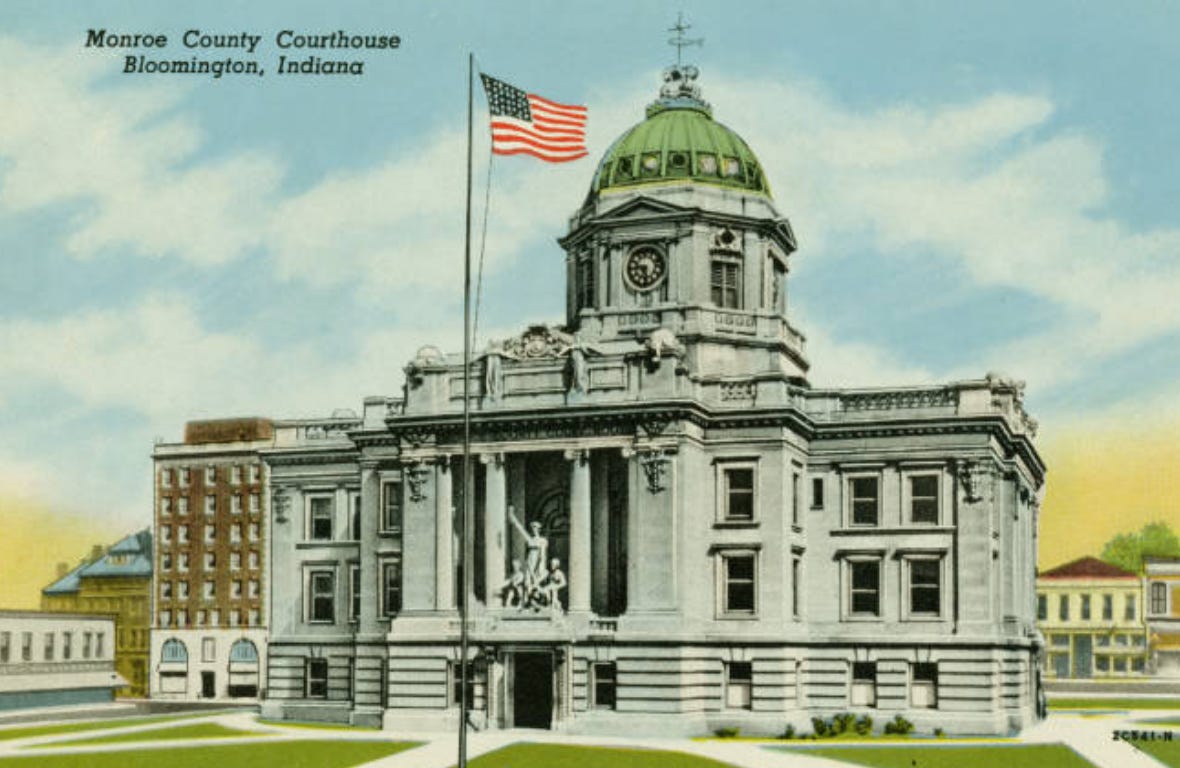
I’ve been thinking about the old courthouse lately. It is a beautiful building that few in our community can access, and others do not feel they belong.
It’s still right there in the center of everything; that Beaux-Arts edifice catching sunrise on flawless limestone; a red-tailed hawk sitting up there on the Fish weathervane for a local shutterbug to catch for the media.
You pass it on your way to dinner, to work, to events on the square. It hasn’t gone anywhere.
But for some time, it doesn’t feel the same.
There was a time when you had a reason to go inside. People got married there. Before online bill pay, you might go visit your Treasurer or Assessor. Commissioner Charlotte Zietlow would hold the occasional music event in the Rotunda. Events would pull you in, even if you didn’t have business to do. It felt like part of the life of the community—not just a place where government happened.
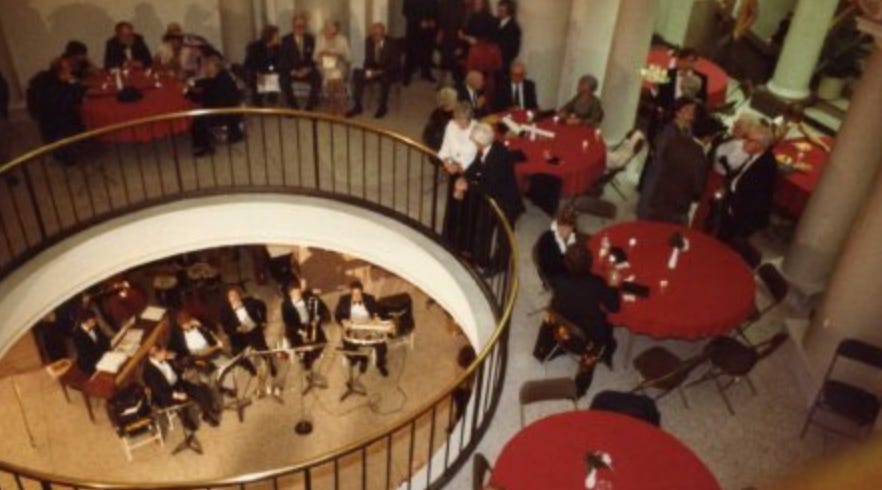
photo: Monroe County History Center
Now, for a lot of people, it’s something you walk past. Maybe get a selfie during a stroll or protest. Or use the restroom during the lighting of the square in December. And then move on.
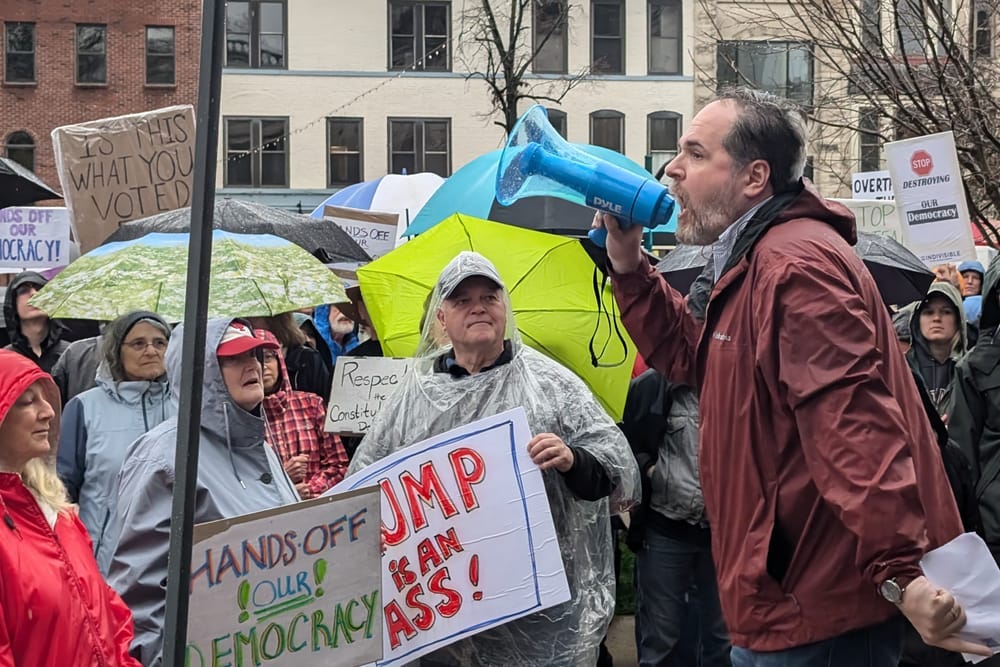
photo: B Square Bulletin/Askins
The Historic Courthouse may have served a practical role as the county seat’s government center. But it was the creative class - stonecarvers, mural painters, architects - that made a functional space into a monument. Over the past century, the grounds have been adorned with memorials to peace, freedom, the fallen, and the beloved.
Today, the building is locked up at 4 unless a government meeting is happening. That is a choice by the Commissioners’ office. The courthouse can be leased, but it isn’t really pushed out there as an option. If you know, you know, as the kids say.
Recently, John Fernandez wrote in the Herald-Times that part of our economic future depends on taking the creative economy seriously. Nationally, arts and cultural production represent more than $1 trillion in economic activity—over 4% of GDP. Here, we celebrate creativity. We point to Jacobs School of Music, to our festivals, to the Bluebird, or the Gallery Walk, or to the artists and businesses that give this place its distinction.
But we haven’t always built around it.
Too often, creative work shows up at the end of a process, not the beginning. A mural here. A sculpture there. Something added on after everything else is already decided. And something essential never quite takes root. Call it “The Bloomington School” - what does our art and vibe look like in the world? Think of T.C. Steele’s work, capturing Brown County. Or Joel Washington’s portraits? Or Mellencamp’s?

photo: TC Steele. On the Road to Belmont. Public Domain
If we’re serious about this, it would show up in the choices we make about zoning and housing too—and who gets to use it. It shows up in whether independent artists, musicians, and creative businesses can afford to stay here.
It shows up in whether public buildings are treated as burdens to manage, or places to share. Because if the people who create the culture can’t live here, we don’t have a creative economy. We have a facsimile of one.
While I am laser focused on housing and careers in my campaign, I also know I need to relax too. My own artistic expression over the years have been satiated in landscape painting or abstract art as a kid, or singing at the Kennedy Center in a symphonic chorus after work in DC, or even that one semester I sang with the Bloomington Chamber Singers, or dusting of my Indiana-made Bach trumpet to run through some scales. As an unapologetic culture vulture, I think about how the county could re-engage the arts community in meaningful ways.
What would the Courthouse look like as a venue for Lotus Festival or Granfalloon?
Or if we form or partner with a non-profit to collaborate with the community on murals or art to add the late 20th and early 21st century story to our courthouse?
Or hosting an exhibit of K-12 artwork from our schools?
Or adding historical exhibits on our heritage and diversity?
Or activating the space again for weddings or civic occasions beyond just the lighting of the Square in December?
Our Monroe County ancestors paid for a historic courthouse that was more than function - it is clear they were concerned about civic pride in the shape, texture, and art found within. Maybe it is time, after what seems a long season of division and fatigue, for a "Renaissance Monroe,” the historic courthouse as a centerpiece of that vitality.
In times of anxiety, the arts have always given voice and space for expression and human spirit. We balance the hard work and urgency of government reform with the calm that the arts can bring.
We need our civic temple now more than ever. And creative zoning and housing choices to support not just the idea of the arts, but the artisans too.
Having a Commissioner with a eye toward culture is another way I’ll bring a new direction to Monroe County. Let’s create more.